
Designing for How Life Actually Works
Design isn’t just something we see, it’s something we experience in the way a space feels and functions for the people living in it. In this final installment of my Design as Applied Intelligence series, I explore why some rooms immediately feel natural to move through while others, though beautiful, can feel awkward or difficult to navigate. From kitchens to bathrooms, the way spaces are planned, connected, and aligned with daily life makes all the difference. If you haven’t been following this series, articles 1 through 4 began the journey...this final installment brings it all together, showing how these design principles connect in real life.
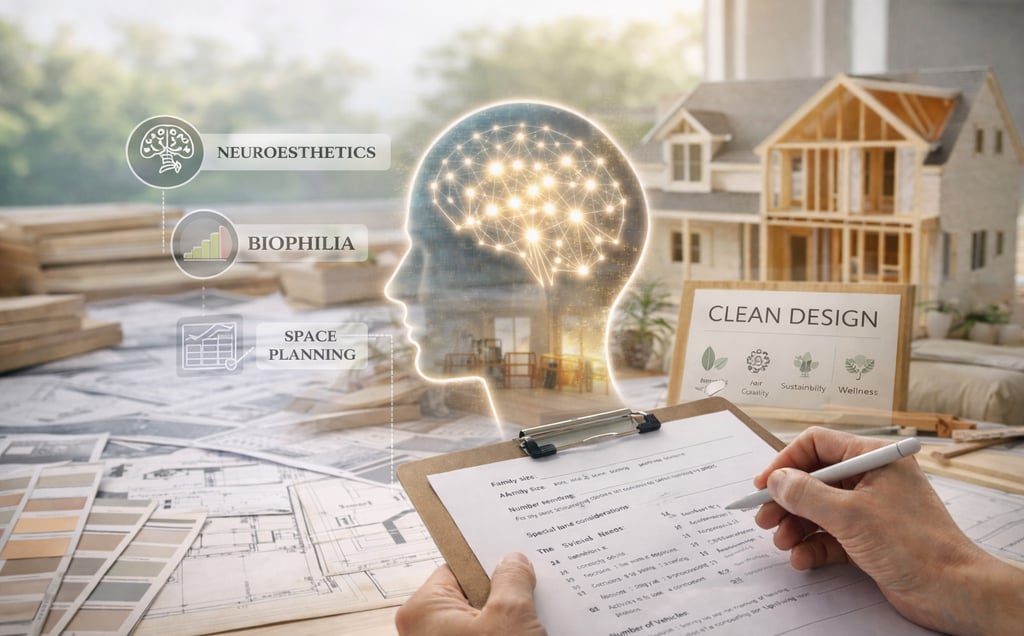
Have you ever walked into a room that looks beautiful but immediately feels off? There’s nothing obviously wrong; the finishes are nice, the furniture is styled well, yet your body hesitates. That subtle feeling of resistance isn’t about taste or décor. It comes from how the space is organized, how it guides movement, and how it interacts with daily routines.
Design isn’t only visual, we notice it right away in how a space works. How easily we move, where we pause, gather, or rest influences how the space feels over time. Some rooms look finished but never quite work, while others feel natural without excess. That difference is rooted in planning, connection, and how closely a space reflects real life.
This is where neuroaesthetic and biophilic principles show up in real life. They help explain why certain spaces feel natural to be in, while others create subtle resistance without us realizing it. When design reflects how people instinctively process space, it feels intuitive rather than something to navigate awkwardly.
Design Is Lived, Not Observed
We experience our homes through movement, routine, and repetition. We feel them early in the morning, late at night, and in all the in-between moments when no one is overtly thinking about how things look. The real story is hidden within the intricacies of space planning:
How easy is it to move from one area to another?
Do everyday tasks flow naturally, or require repeated adjustment?
Does the space feel accommodating, or slightly resistant?
These questions highlight how a home is shaped and how it feels over time. It’s no longer just about style…it’s about how the space behaves once real life is happening inside it.
Everyday Rooms Shape Everyday Experience
Homes are often designed with aesthetics at the forefront, and that matters. Beauty draws us in, setting the mood and creating emotional connection, but when the look of a space outweighs how it works, everyday life starts to feel harder than it needs to be.
The rooms we use most aren’t just meant to be seen, they’re meant to carry us through the day. It’s how kitchens, bathrooms, and the spaces that connect them manage constant movement, decision-making, and repetition. When the layout doesn’t align with how people actually live, even the most beautiful design can create obstacles that subtly interrupt daily life.
This is where space planning becomes essential. It’s not about sacrificing style, it’s about shaping each space so it can absorb real life as it happens. Thoughtful planning reduces daily obstacles, guides natural movement, and creates rooms that look good and work well in real time.
Kitchens: Where Planning Becomes Personal
Kitchens are one of the clearest examples of sensory balance at work. A kitchen can look beautiful and still feel difficult to use. When work areas overlap, storage isn’t where it’s needed, or finishes compete for attention, even simple routines take more effort than they should.
Thoughtful design offers solutions. Storage options are positioned for convenience, so utensils, appliances, and ingredients are easy to reach. Clear zones allow tasks to happen naturally, and material choices are both durable and visually cohesive. Lighting adjusts to support both cooking and entertaining, while allowing for moments to pause. The result is a kitchen that no longer draws attention for its dysfunction, movement feels natural and unforced.
Bathrooms: Small Spaces, Big Impact
Bathrooms may be smaller in size, but their impact on daily life is significant. These are spaces we use at our most vulnerable moments, first thing in the morning and last thing at night. When awkward layouts waste valuable space and storage is overlooked, countertops become cluttered and routines are disrupted. Materials may look good but don’t hold up to daily use, moisture, or wear. The result is a space that looks finished but doesn’t function well.
Working closely with clients addresses these challenges early. Understanding how the space will actually be used informs layout decisions, storage solutions, and material choices that balance appearance with performance. When function and aesthetics are aligned, the space becomes easier to use day after day.
Grounding, Indoors
Grounding is often thought of as being outside, but most of our time is spent indoors, making the way a home is arranged especially important. Rooms that are organized to guide movement naturally, paired with consistent materials and light, create spaces that allow moments to sit, pause, or gather. Even small adjustments like defining corners for rest or arranging materials and finishes that are comforting and familiar to the body can help people feel more present and connected to their home. The way the rooms work together shapes routines, reinforces connection, and allows for everyday tasks to happen without extra effort.
How Thoughtful Design Impacts Daily Life
My work is rooted in this idea: homes should feel aligned with the people living in them. When planning is thoughtful, materials are chosen with care, movement feels natural and routines feel smoother. Rooms become environments where life happens with ease and beauty and function exist together. For me, this is successful design in practice; when a home looks beautiful, functions smoothly, and feels made for everyday living.