
Clean Design: How Materials Shape Comfort, Health, and Daily Life
Healthy design doesn’t have to sacrifice beauty....In fact, the best spaces do both. In article four, I explore how materials, light, and biophilic thinking influence how we feel in our homes every day; physically, mentally, and emotionally. From low-to-no VOC finishes to natural textures and thoughtful room planning, these choices reduce friction in daily life while maintaining a refined, elevated aesthetic. This isn’t about trends or labels. It’s about creating homes that feel comfortable, considered, and aligned with real life, spaces that look good and feel good to live in. If you’ve ever loved how a space looked but not how it felt, this piece is for you.
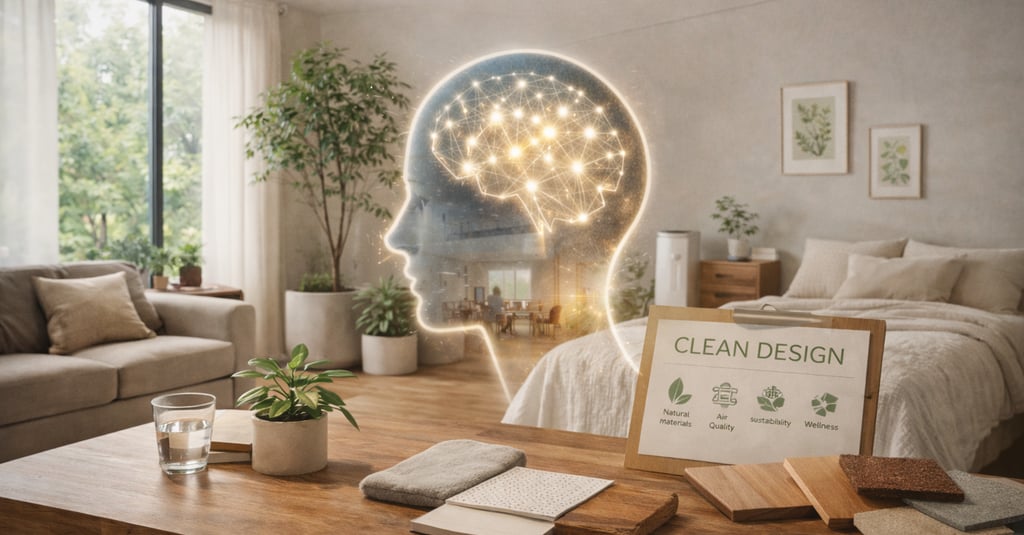
Design isn’t just about how a home looks; it’s about how it feels to live in each day. The surfaces you touch, the textures around you, and the way light moves through rooms all influence comfort, energy, and focus. These effects are often subtle but meaningful, shaping how daily routines feel and how your body and mind respond to your surroundings.
Discomfort can be hard to put into words. It’s expressed by spaces that feel cramped, cold, dark or sterile, which can be overwhelming and make everyday life feel heavier. However thoughtful choices in materials, layouts, and finishes help rooms feel comfortable, inviting and in tune with the way life actually unfolds.
Living With Materials
Every material introduced into a space carries some kind of load, whether it be chemical, sensory, or cognitive. Paints, flooring, cabinetry, countertops, wallcoverings, adhesives, sealants, and textiles all contribute to the environment long after installation day, and these materials have both visible and invisible lasting effects. Some conventional materials release compounds that affect indoor air quality, while others contribute to sensory strain through glare, excessive contrast, poor acoustics, or visual noise.
This matters most in spaces where people spend extended periods of time such as workspaces, bedrooms, kitchens, and other areas that are meant for focus or rest. These factors influence how a space feels to live in both physically and neurologically.
Choosing low-to-no VOC paints, natural fibers, responsibly sourced wood, and non-toxic finishes helps reduce environmental stressors that can affect energy, mood, and long-term health.
Hard Materials Matter Just as Much
Clean design is often associated with paint or upholstery, but hard materials play an equally significant role in how a space performs over time.
In my role as designer, I pay close attention to:
Flooring and carpet, including emissions, acoustics, and how the surface feels underfoot
Countertops and work surfaces, from sealants and resins to maintenance requirements
Cabinetry and millwork, especially substrates, finishes, and adhesives
Wall and ceiling treatments, including reflectivity, texture, and visual impact
These decisions affect durability and maintenance, but also how a space enhances ease of use. Well-chosen, durable materials also adapt naturally to daily life. Surfaces that feel pleasant, easy to maintain, and resilient to wear help a space feel manageable rather than high maintenance. You may not notice these details consciously, but they influence how a home feels over time.
Where Biophilia and Neuroaesthetics Come In
Reducing toxic load isn’t only about what materials don’t contain, it’s also about what they offer the nervous system. This is where biophilic and neuroaesthetic principles become essential tools rather than abstract ideas.
Biophilia helps guide material choices that reflect how humans naturally interact with their surroundings. Materials like stone, wood, clay, wool, and linen tend to absorb sound, soften light, regulate temperature, and age in ways that feel familiar rather than disruptive. Used thoughtfully, they don’t just reduce chemical exposure, they create environments the body recognizes as grounding. I will be touching on this subject at a later date.
Neuroaesthetics adds another layer of understanding and how the brain responds to pattern, contrast, texture, rhythm, and visual complexity. Highly reflective finishes, sharp contrasts, and excessive patterning can increase cognitive load over time. Natural materials that breathe, patina, respond to light, and that offer subtle variation and organic irregularity, the brain processes more easily, reinforcing focus and emotional regulation.
Designing for Real Life, Not Ideal Conditions
Clean design isn’t about perfection or fear-based decision-making, it’s about realism. Homes are lived in, offices are busy, so materials need to perform without constant maintenance. This means considering how materials age, how often people come into contact with them, and how they hold up under everyday use.
Health Without Aesthetic Compromise
Healthier design does not limit creativity, in reality, it demands deeper creativity. Clean design doesn’t dictate a look, it can be layered, modern, traditional, or minimal. The goal isn’t to remove character but to ensure beauty and performance coexist.
Homes change over time. Families grow, routines shift, and work patterns evolve. Choosing materials and layouts that are durable, flexible, and health-conscious helps spaces adapt gracefully. Designing with longevity in mind doesn’t limit creativity, it encourages intentional, thoughtful choices that make a home feel welcoming and easy to live in because they are they are grounded and intentional.
Grounding at Home
Grounding isn’t only something that happens outdoors. Most daily life unfolds indoors, and the way rooms are arranged and finished has a profound effect on whether we feel calm and at ease or overstimulated.
When materials, light, and layout are chosen with comfort and health in mind, grounding happens naturally. Surfaces that feel pleasant to touch, rooms arranged for smooth movement, and visual balance all help the body and mind slow down and feel balanced. This isn’t a separate wellness activity; it’s the natural result of thoughtful design. Future articles will explore how these principles can bring grounding practices into suburban homes where nature access is limited.
Design That Evolves With Life
Homes change as families grow, routines shift, and work patterns evolve. Materials and layouts that are durable, flexible, and health-conscious allow spaces to grow with life’s changes. This approach doesn’t limit creativity, it encourages intentional choices that make daily living smoother, more harmonious, and emotionally satisfying. At its best, design creates a relationship between people and their homes. It’s the choices that foster a lasting sense of ease, presence, and harmony; the kind of feeling that makes a house truly feel like home.
Design in Action: Living What I Recommend
These principles aren’t just theoretical; they guide how I work and live every day. In my own home and in client projects, I carefully select materials, balance textures and light, and arrange spaces to create calm, clear, and functional environments. The results are tangible; rooms that feel effortless to use, surfaces that are healthy and easy to maintain, and layouts that flow naturally with daily routines.
By applying these actionable strategies, I help clients experience a higher quality of life in their spaces, less stress, more comfort, and a home that feels truly aligned with how they live. It’s the combination of thoughtful material choices, sensory balance, and practical biophilic design that makes interiors not only beautiful, but also meaningful and life-enhancing.