
Biophilia Without the Buzzwords: When Science Actually Belongs in Design
For anyone frustrated by spaces that feel “off” despite looking good, Article Three in my series shares a practical, human-centered approach to biophilic design; one that adapts with life, supports daily routines, improving quality of life over time. This shifts design away from short-lived trends toward spaces that are built to last and genuinely serve the people using them.

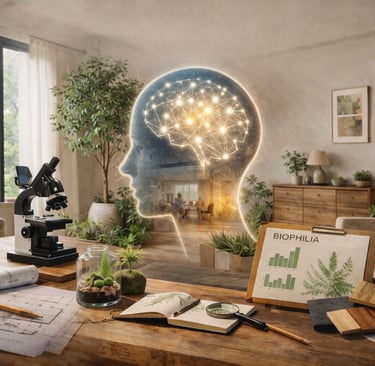
Biophilia is a word that shows up often in design conversations, usually alongside images of greenery, natural materials, and light-filled spaces. While those elements can be meaningful, biophilia itself is not a look or a trend.
At its core, biophilia is about how people respond to their surroundings, how light, materials, and sensory balance affect the way we feel and function in a space. When used thoughtfully, it can support wellbeing, but when used without context, it risks becoming another layer of decoration that doesn’t actually improve daily life. The difference is intention.
What Biophilia Is And What It Isn’t
Biophilia isn’t about adding more plants or making a space feel “natural” on the surface. It’s about understanding how people experience their environment over time.
When applied well, biophilic considerations reflect:
How natural light affects energy and focus throughout the day
How materials feel, not just on install day, but months and years later
Where people need stimulation and where they need rest
How much visual information a space asks us to process at once
Biophilia is not a checklist of features to be added, it is the thoughtful use of design choices that support people over time, both physically and emotionally.
Where Biophilia Loses Its Meaning
As interest in wellness has grown, biophilia has increasingly entered design marketing language. When that happens, it is often applied as an afterthought rather than being integrated into the design framework from the beginning. This trend-driven, diluted approach can produce unintended results, such as:
Plant life that requires more maintenance than a homeowner can realistically sustain
Plant placement where greenery struggles to survive rather than thrive
Natural materials selected without consideration for wear, aging, or upkeep
Excessive layering of textures and patterns that leads to visual fatigue
Wellness-driven language that sounds compelling but doesn’t reflect how the space is actually used
When these choices aren’t grounded in real-life conditions, the result can feel disconnected despite looking good on paper.
How Biophilia Works Best in Practice
Biophilia has the greatest impact when it informs how a space is planned and experienced, not simply how it appears.
In real world practice the approach may unfold as:
Allowing daylight to guide where people gather or focus
Using materials to subtly signal how a space is meant to be used
Creating areas of visual calm within more active environments
Designing spaces that feel comfortable rather than overstimulating
These decisions are often subtle. They don’t draw attention to themselves, but they shape how a space feels and functions every day.
Designing for Real Life, Not Ideal Conditions
A biophilic approach only works if it holds up under real conditions. Homes and workplaces are meant to be lived in. They’re busy, imperfect, and constantly changing, so a design strategy that only functions when everything is perfectly maintained doesn’t truly serve the people using the space.
Thoughtful biophilic design accounts for:
The amount of time and care a space can realistically receive
Seasonal shifts in light, function, and daily patterns
Budget considerations alongside long-term durability and performance
When these factors are considered, biophilia becomes sustainable rather than symbolic.
Biophilia and Ease of Use
One benefit of biophilic design that often goes unnoticed is how much easier it makes a space to live in. When visual clutter is reduced and sensory balance is considered, people feel less overwhelmed and more at ease. This is something I practice in my own life.
I love texture. However, when too many elements compete for attention like texture, contrast, pattern, the opposite effect can occur. A space can feel overstimulating rather than calming.
This is where being selective matters. The goal isn’t to recreate nature indoors, but to create environments that feel comfortable, intuitive, and tailored to how each client actually lives.
Science as a Guide, Not a Selling Point
Biophilia, like other science-informed approaches to design, should guide decisions, not be used to justify them after the fact. When applied thoughtfully, science encourages designers to observe, evaluate, and refine, keeping the focus on impact rather than appearance.
When used primarily as a selling point, it can dilute its credibility. Inevitably, the people living and working in the space are the ones who feel that disconnect.
Designing for Long-Term Wellbeing
The most successful biophilic spaces are not the ones that look the most “natural,” but the ones that continue to work well over time. They adapt as needs change, remain comfortable rather than demanding, and respond well to the way people actually live.
Biophilia as Responsibility
When used with intention, biophilia becomes part of a larger design mindset; one that values care, longevity, and thoughtful decision-making. It shifts design away from short-lived trends and toward spaces that are built to last and genuinely serve the people using them. And when that happens, science doesn’t overpower design. It simply makes it better.